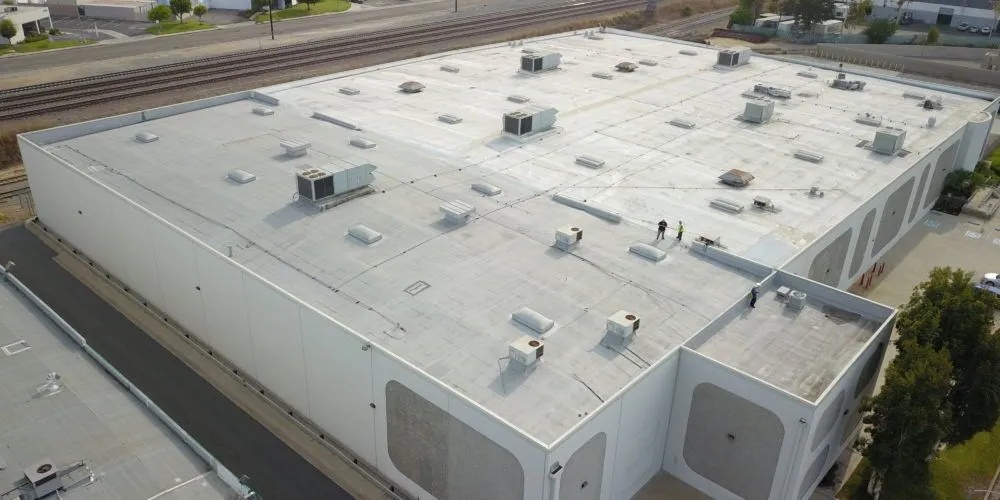
Rusted, sagging, leaking, or all of the above, these tell-tale signs likely mean your roof’s effective performance life is coming to an end. As ailments like water damage, ponding water, moisture, and mold begin to take hold, indoor air quality (IAQ) can decrease together with thermal efficiency and occupant comfort.
Concern regarding the expense required to fully tear down and replace the roof may soon set in. But before writing off the roof to the landfill, it’s likely there’s another option.
The Restoration Route
Assuming the roof is structurally sound, roof restoration coatings can be a non-invasive, efficient, cost effective, and sustainable alternative. By reinforcing the existing roof membrane, the surface is essentially repaired and strengthened.
In retaining the existing structure, this means extending roof life and improving the building’s IAQ. This then avoids the large cost associated with a brand-new roof, plus avoiding all the carbon, material, and resources associated with new construction.
Cool roof coatings boost thermal efficiencies by significantly decreasing rooftop temperatures. The U.S. Department of Energy states that conventional dark roofs can reach temperatures of up to 150 °F whereas reflective cool roofs won’t exceed 50 °F.
As opposed to a full roof replacement which involves relocating or temporarily shutting down the business, thereby impacting revenue, roof restoration virtually eliminates downtime and business interruption.
Replace or Restore?
In evaluating the option of roof coatings vs roof replacement, it must be determined that the roof can be coated, the structure is intact, and any other wear and tear is minimal. For example, if the roof deck is rotting, there is extensive water damage, or the roof materials are in poor shape, the coatings cannot address underlying structural issues.
Consequently, roof restoration coatings are only an option when the roof is still functional.
Another factor is the roof type. While built-up, single-ply, modified bitumen, and metal are compatible with coatings, a standard coating may not work with gravel BUR or asphalt shingles. For gravel, spray foam systems may be a good fit.
As a general rule of thumb, the following criteria must be met to ensure a successful residential/commercial roof coating project.
- The roof’s insulation must be fully dry. If not, a remediation plan should be put in place.
- Damaged seams or surfaces must be replaced prior to coating.
- Following coating, inspections and required maintenance are performed on a bi-annual or annual basis.
- The roof’s drainage system must be intact.
How Coatings Work
Part of the roof coatings vs roof replacement equation is understanding how coatings work.
Elastomeric roof coatings are fluid-applied roofing layer which are brushed, sprayed, or rolled across the roof’s full surface. Upon curing, it creates a seamless, penetration-free, monolithic, fully-attached single ply system protecting the roofing asset against moisture and UV rays. If a reflective coating is selected, this lends the added benefit of enhanced energy efficiencies from lowered air conditioning loads resulting from a cooler rooftop.
This new “outer armor” is a cost-effective way of extending roof life, providing high tensile strength and elongation, and resisting dirt, fungal, and algal buildup.
Silicone vs Acrylic Roof Coatings
Once you’ve determined that coatings are the way to go, the next decision is figuring out which coating type is best suited for the application.
Acrylic is a water-based product, applied in several coats. It’s compatible with many roof types, is cost effective, and provides excellent protection.
For example, PG 700 acrylic is a high-quality elastomeric coating that protects against weather exposure and UV rays while keeping the surface cool.
While acrylic coatings stand up to extreme temperatures, by design, the coating sheds an oxidized layer of approximately ½ to 1 dry mil of thickness each year, perhaps less depending on environmental conditions. This enables the coating to maintain its color, but does place a limit on its lifespan of effectiveness as it continues to shed.
In the silicone vs acrylic roof coatings evaluation, silicone is a more robust solution. Lending a high level of durability and protection, depending on thickness, coating quality, and application techniques, a silicone coating system can last up to 20 years. Applied in one coat, it offers greater resistance to standing water and moisture vapor penetration, and protects against UV exposure reflecting up to 90% of UV rays.
As an example, PolyBrite 90 is a premium grade silicone coating providing excellent, long-lasting protection from the elements.
Of note, dirt tends to accumulate on the surface of a silicone-coated roof, so more regular maintenance might be required, especially in drier climates. With both silicone and acrylic, it’s also important to perform an adhesion test beforehand to ensure that the coating properly bonds to the existing roof.
Full System Protection
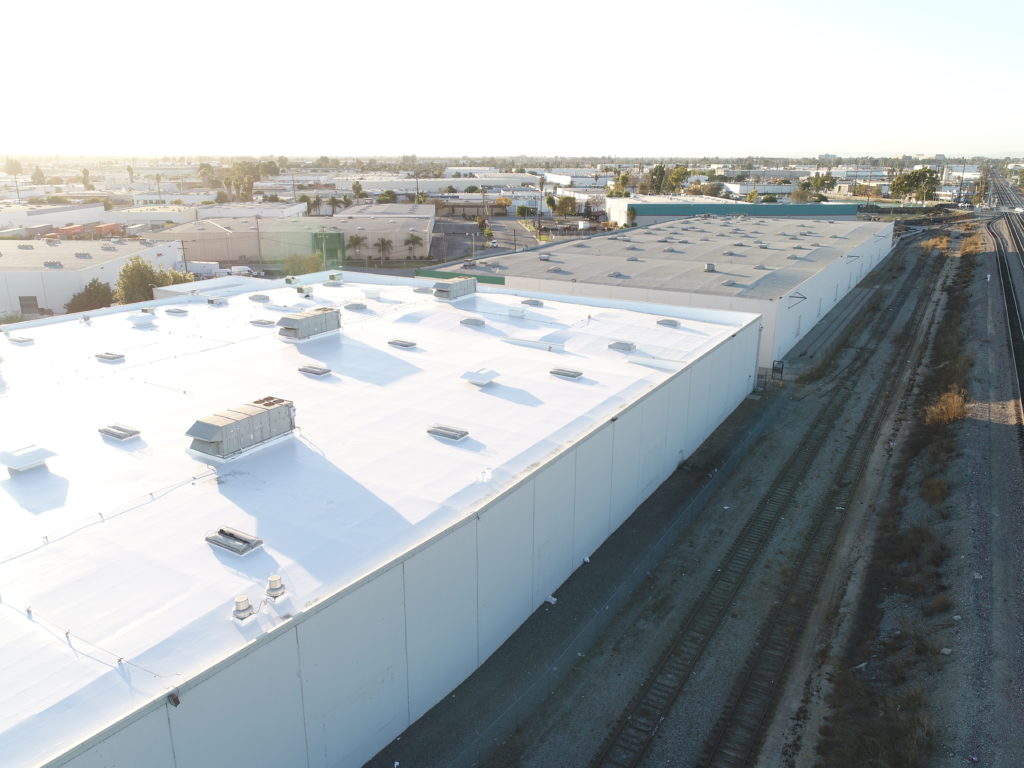
Once the silicone vs. acrylic coatings question has been settled, it’s still important to approach the roof coatings vs roof replacement discussion from a full system standpoint. In other words, a roof coating might ultimately be sufficient for your current needs, but an effective replacement solution extends beyond a simple coating.
To best ensure adhesion and long-term protection, coatings should be paired with the right supporting system components. This includes primers and reinforcements which are formulated to best ensure bonding and performance.
The following is a sampling of products that are customized for specific roofing types and applications.
- PolyBrite 98 supports adhesion of silicone roof coatings for a variety of porous and non-porous substrates, for example PVC.
- PolyBrite 79, designed for TPO membranes, is a solvent-based primer for both acrylic and silicone roof coatings. It supports a complete, monolithic surface application.
- PolyBrite 745 is made for acrylic coatings with modified bitumen roofing systems. The thin solution penetrates pores and dries quickly.
A reinforcement may be recommended to make the coating stronger, more flexible, and less likely to crack or leak.
For instance,PolyBrite®️ Reinforcing Polyester is a stitchbonded fabric that can be applied to elastomeric coatings. It easily conforms to smooth and semi-smooth surfaces.
To Learn More
To better inform your roof coatings vs. roof replacement analysis, and evaluate the pros and cons of silicone vs. acrylic coatings, Polyglass offers a number of educational resources.
To explore Polyglass’ extensive collection of roof coating systems see Elastomeric Roof Coatings.
Frequently Asked Questions
How long does a roof coating last compared to a full roof replacement?
This depends on the coating type. Acrylic coatings offer strong, cost effective protection but gradually shed a thin oxidized layer each year, which limits their long-term lifespan. Silicone coatings are more durable and, depending on thickness and application quality, can last up to 20 years.
Is silicone or acrylic the better choice for my building?
It depends on your climate, budget, and exposure to standing water. Acrylic is water-based, easier on the budget, and performs well across many roof types. Silicone offers superior resistance to ponding water and UV exposure, though it can attract more surface dirt and may need more frequent cleaning, especially in drier regions.