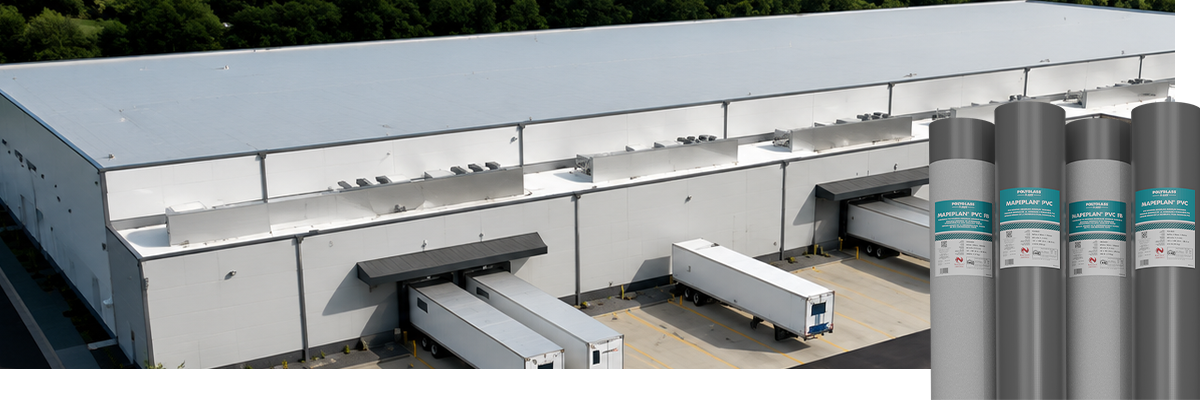
Mapeplan® PVC membranes are high-performance single-ply roofing solutions for low-slope commercial applications. Built on proven PVC chemistry, they provide durable protection against fire, chemicals, ponding water, and UV exposure. With flexible installation options and system compatibility, Mapeplan PVC membranes adapt to a wide range of project requirements.


- What is Mapeplan PVC?
Mapeplan PVC (polyvinyl chloride) is a high-performance, single-ply membrane designed for commercial and low-slope roof systems. It delivers long-term waterproofing through heat-welded seams and a durable, flexible formulation.
- Why choose PVC roofing?
PVC roofing is valued for its proven performance and versatility. Key benefits include:
- Heat-welded seams that create a consistent, watertight bond. Since there are no adhesives at the seams, the bond between sheets can be considered monolithic when welded accordingly.
- Excellent resistance to chemicals, grease, and environmental contaminants. The superior resistance to these chemicals makes PVC ideal candidates for restaurants, airports, and other roof areas that are exposed to such chemicals.
- Reflective surface options that can enhance energy efficiency. Mapeplan comes in standard white, light gray, and tan colors.
- Long-term flexibility and durability in varying climates. PVC is inherently very flexible, making it more installer-friendly for areas with difficult detailing.
- Low maintenance requirements over the life of the roof. PVC is a time-tested roofing material that can withstand water. However, it is always recommended that low-slope roofs have a preventative maintenance program in place to ensure maximum life.
- Inherent resistance to fire and self-extinguishes once the flame source is removed.
- How long does a PVC roof last?
When professionally installed and properly maintained, a PVC roofing system can deliver 20–30 years or more of reliable performance. Warranty options for up to 30 years are available for Mapeplan PVC roof systems.
- How is Mapeplan PVC roofing membrane installed?
Mapeplan PVC membranes can be installed using multiple system configurations, including mechanically attached (in-seam and induction-welded) and fully adhered assemblies. Seams are heat-welded with hot air, forming a monolithic surface designed to resist water infiltration.
Available in wide roll widths, Mapeplan PVC membranes can help reduce the number of seams and improve installation efficiency across large commercial roof areas.
- What sets PVC apart from other single-ply systems?
PVC combines the benefits of heat-welded seams with enhanced resistance to chemicals, oils, and grease. Compared to other single-ply options, it offers:
- Proven long-term performance history.
- Strong seam integrity with a “wide weld window,” making it much easier to weld and helping minimize installation issues caused by improper welding.
- Reliable performance in demanding environments such as restaurants and industrial facilities.
- More flexible than other single-ply membranes.
- No need for cut-edge sealant, which speeds up installation time.
- Is Mapeplan PVC energy efficient?
Yes. Mapeplan PVC is available in highly reflective colors (white, grey, and tan) that help reduce heat absorption. This can contribute to lower cooling demands and improved building energy performance, especially when combined with Polytherm insulation.
- How does PVC perform in harsh conditions?
PVC roofing is engineered to perform in a wide range of environments. It maintains flexibility in temperature extremes and offers strong resistance to UV exposure, weathering, and many chemicals.
- Is Mapeplan PVC a sustainable option?
Mapeplan PVC can support green building goals through its long service life, reflective surface options, and potential recyclability. Its durability also reduces the frequency of roof replacement over time.
- Where is PVC roofing commonly used?
PVC is a preferred solution for a wide range of applications, including:
- Commercial, Manufacturing, and Industrial Facilities
- Restaurants, Food Service, and Processing Environments
- Healthcare and Educational Buildings
- Data Centers, Airports, and Critical Infrastructure
- Warehouses and Distribution Centers
- What maintenance does a PVC roof require?
PVC roofing systems are designed for low maintenance. Routine care typically includes periodic inspections, keeping drains clear, and addressing any localized repairs as needed.
- Can Mapeplan PVC be installed over an existing roof?
In many cases, PVC systems can be installed over an existing roof as part of a recover application. This depends on the condition of the existing system and compliance with local building codes.
Mapeplan PVC FB (fleeceback) installed in low-rise foam adhesive is an excellent option for a direct recover over existing granulated modified bitumen roofs.
- What is a Hybrid PVC system?
A hybrid PVC system consists of one or more plies of smooth-surfaced modified bitumen, with a fleece-backed PVC membrane installed in low-rise foam adhesive. These systems are ideal when the redundancy of a multi-ply system is needed in combination with chemical resistance and ultra-high reflectivity.
- Is Mapeplan a Ketone Ethylene Ester (KEE) product?
- No, Mapeplan PVC does not utilize KEE chemistry and is strictly a PVC membrane (ASTM D4434).
- KEE membranes are listed under a separate ASTM standard (ASTM D6754), which requires at least 50% of the membrane’s plasticizer content by weight to be KEE.
- What warranty is available for Mapeplan® PVC roofing systems?
Polyglass offers system warranties for qualifying Mapeplan® PVC roofing installations completed by contractors enrolled in the Polyglass Tiered Contractor Program. Warranty terms vary based on system configuration, membrane thickness, and contractor certification level. For current warranty details, contact a Polyglass representative.