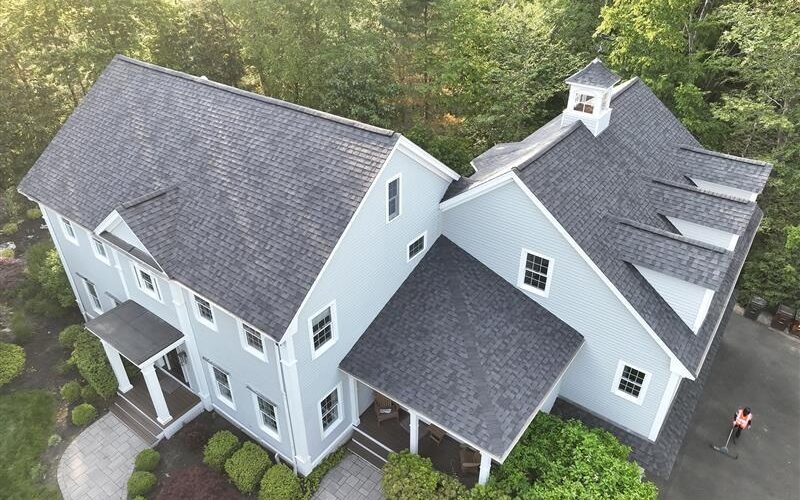
Even the most visually impressive homes require reliable protection, and this 5,000-square-foot custom residence in Newbury, Massachusetts, was no exception. With multiple roof planes, steep slopes, intersecting ridges, and architectural dormers, the existing roofing system had begun to fail, prompting a full replacement.
BG Construction, a Premio Select Contractor, was brought in to carry out the replacement. Upon removal of the existing roof system, the team uncovered extensive rot in the roof decking, requiring significant substrate remediation before any new assembly could begin.
The roof structure itself posed additional technical challenges.
Key Technical Challenges
- Rotten Decking: Required complete re-sheeting prior to membrane installation to ensure a stable and secure roofing substrate.
- Complex Roof Geometry: Multiple valleys, dormers, steep slopes, and intersecting ridgelines increased installation complexity and required precise detailing.
- Installer Safety Requirements: The project demanded a slip-resistant, high-adhesion membrane to support safe movement and secure footing for installation crews on steep pitches.
- Weather Durability: Ice dam protection and high-temperature performance were essential due to harsh New England climate conditions.
- Multiple Intersecting Planes and Gables: Numerous roof transitions elevated the risk of water infiltration, particularly at valleys and connection points, requiring enhanced waterproofing strategies.
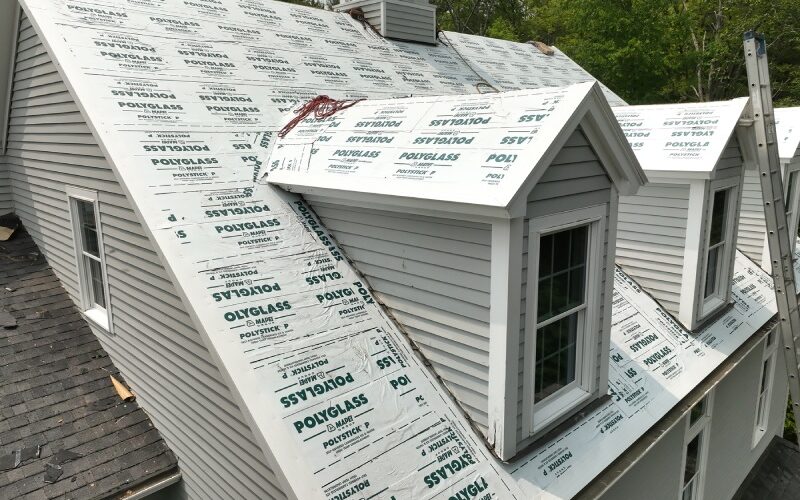
- Four Fully Built-Out Dormers: Each dormer required flexible, self-sealing materials to achieve clean integration and reliable long-term detailing.
- Steep Pitch Slopes: Sharp roof angles necessitated membranes with strong walkability and slip resistance to maintain crew safety during installation.
- Cold Climate Performance: Materials needed proven resilience against ice dam formation, thermal cycling, and high wind loads common in cold-weather environments.
Given these variables, BG Construction required a high-performance underlayment that could handle both the mechanical complexity and environmental exposure of the roof, without compromising longevity or ease of installation.
The Solution: Polystick® P HT from Polyglass USA
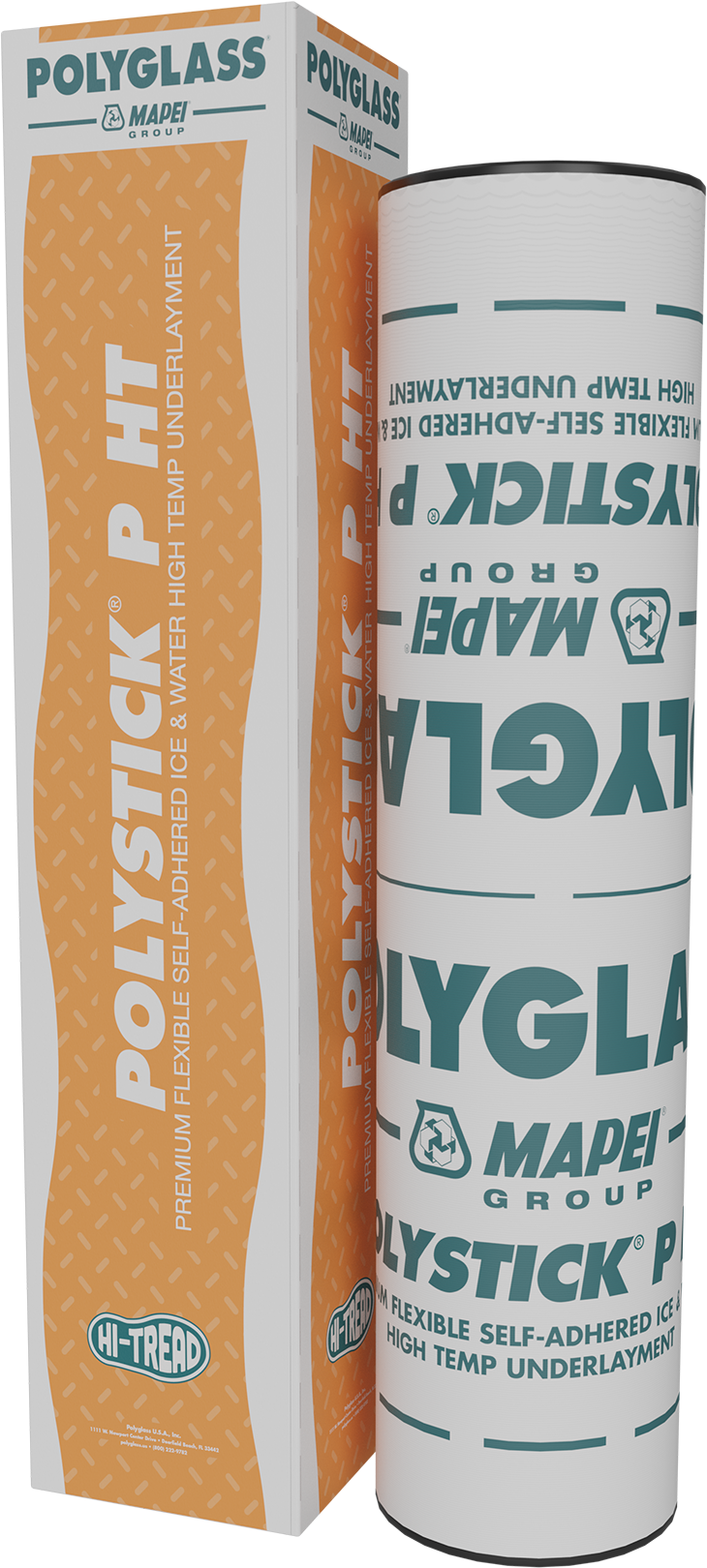
To address these performance needs, BG Construction selected Polystick® P HT, a carrierless, self-adhered high-temperature waterproofing underlayment engineered to deliver long-term moisture protection in demanding environments.
Installation Approach
- After removal of damaged sheathing, the roof deck was re-sheeted and fastened per building code and manufacturer requirements.
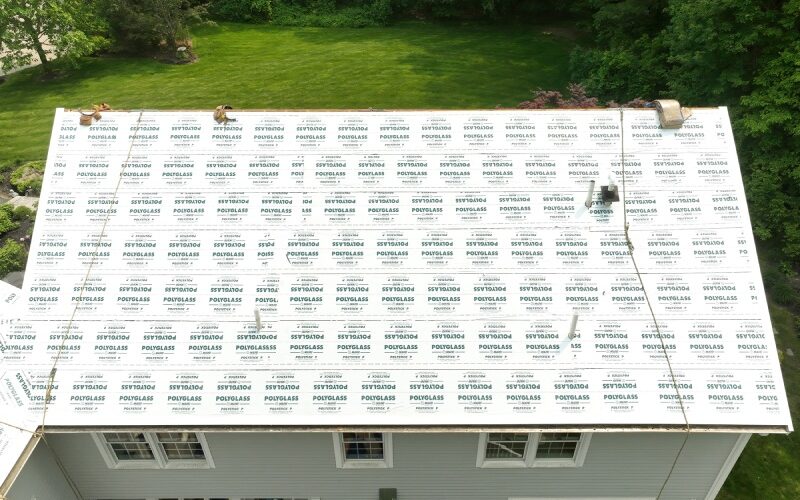
- Polystick P HT was applied directly to the entire roof deck, including under all flashing, along all valleys, and vertically up the dormer sidewalls to ensure continuous water shedding and to mitigate wind-driven rain.
- The membrane was lapped and rolled per Polyglass installation guidelines, with all overlaps self-sealing for watertight performance.
Why Polystick® P HT?
- High-Temperature Performance: Rated for applications under metal and asphalt systems, Polystick P HT withstands high radiant heat loads without degradation.
- UV-Resistant: Polystick P HT is also UV-resistant for up to 30 days, and the Hi-Tread™ UV-resistant and slip-resistant surface allows for shingles to be installed directly to it, eliminating the need for additional layers.
- Carrierless Membrane Construction: Unlike traditional felt or SBS carriers, the membrane conforms effortlessly to complex geometries—ideal for flashing around roof penetrations, eaves, and multiple dormers.
- Hi-Tread™ Surface: Enhances traction for installers, especially on steep pitches—an essential safety feature for this roof’s configuration.
- Split-Release Film: Speeds up application without wrinkles or misalignments, even in colder conditions.
- Ice Dam Resistance: Fully adhered coverage across eaves and valleys provides effective protection against freeze/thaw and ice dam formation, crucial for the Massachusetts climate.
- UV Resistance: Withstands limited UV exposure, allowing for flexible scheduling between underlayment application and final roof covering installation.
“It’s very durable and comes with incredible adhesive value, so our installers don’t have to worry about it releasing under their feet while they’re working on the roof,” said Barry Melanson of BG Construction. “It’s one of the best-performing membranes we’ve ever used.”
Support Beyond the Product: A True Partner in the Field
Beyond product selection and performance, BG Construction emphasized the importance of working with a manufacturer that understands contractor needs on the jobsite. Polyglass USA offered reliable delivery logistics, responsive warranty support, and contractor training that directly impacted project efficiency and confidence.
“We never have issues with deliveries or warranties when we work with the Polyglass team,” said Melanson. “And they sent our team down to Florida to get registered on new applications and warranty procedures, so everyone on our crew knew exactly how to apply it—and how it performs under pressure.”
By the Numbers
Location
15 Cortland Lane
Newbury, Massachusetts
Size
5,000 square feet
Challenges
- Rotten roof decking
- Steep rooflines with angles and eaves
- Harsh New England climate with snow, ice, and temperature swings
Product Spotlight
Polystick® P HT
Polystick® P HT is a self-adhered, high-temperature waterproofing underlayment built for demanding roofing applications. Its Hi-Tread™ top surface combines slip resistance with UV durability using a polyolefin composite that holds up under direct sun exposure and heavy foot traffic during installation. The adhesive compound is elastomeric and high-temperature-rated, ensuring a secure, long-lasting bond even under intense radiant heat loads. Unlike traditional felt or SBS-carrier membranes, Polystick® P HT uses a carrierless construction that gives it exceptional flexibility, conforming cleanly to complex geometries without buckling or bridging.
It is compatible with asphalt shingles, metal panels, synthetic tiles, and other roof coverings, making it a versatile choice across roofing systems. Ideal applications include full-deck coverage, valley protection, dormer sidewalls, and flashing transitions where continuous waterproofing performance is critical.